Tuesday, June 18, 2013

How to Extend the Life of Your Car


Many people are concerned with getting the most out of their car. A car is usually an individual's second most expensive investment behind their home. In order to protect your car and ensure that it lasts a long time, here are some important tips.

Most importantly: Read the manual.
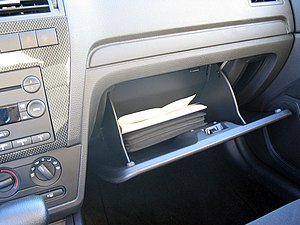
This sounds simple, but for many, our manual sits in our glove compartment ignored. Take some time to read your car manual and learn about scheduled maintenance and other important information. Your manual will tell you how often you should get your oil changed, what your tire pressure should be, what fuel octane should be used, etc. Getting to know your car allows you to care for it better and more efficiently. This will help your car last longer and save you from expensive and unnecessary repairs.

Store your car well. Try to park your car in the shade or in a garage to protect it from the elements. If you are storing your car for extended periods of time, contact your mechanic for suggestions.

Check your oil and fluid levels. Many of the containers are clear or have a dipstick with level measurements. Take a look at your manual or speak to your mechanic to learn more about fluid levels.

Stay on top of your maintenance. Find out how often you should be bringing your car in. Keeping your car up-to-date on maintenance and repairs can prevent future car trouble and can extend the life of your vehicle. Here are some tips to keep your car in great shape.

Check your tire pressure and get your tires rotated. Low riding tires can decrease the life of the tire, decrease fuel economy, and effect stoppage time. Rotating your tires prevents the tires from wearing unevenly and allow you to get the most out of your tires.

Use your parking break. We often don't use our parking break unless we are on a hill. However, neglecting to use your parking break can cause unnecessary damage to your breaks and can decrease their life.

Wash your car regularly. Many people put off washing their car. Rust and corrosion can set in from dirt, acidic conditions, and scratches. Here's how to properly wash your car.


Tuesday, June 11, 2013

How To Clean Your Headlights


Headlights play an essential role in the operation of your car, especially during these dark winter months where the days are shorter and the skies grow cloudy. Clean and clear headlights might make the difference in spotting oncoming hazards.. Just like any part of your car, headlights can lose their luster and performance with age. Here are some ways to return your dim and dirty headlights to the brightness needed for safe winter driving.

Tip: It is important to note that headlights dim through a natural oxidization of the lenses, not just avoidable dirt and grime.

Homemade Remedy: While this solution is a bit more inexpensive, the effectiveness in cleaning your headlights varies from car to car. In order to remove this headlight 'rust' you'll need a gritty solution for polishing.

1 box of baking soda
1 tube of toothpaste
1 towel
¼ cup of dishwashing detergent

1: Use dishwashing detergent to wash away the residual dirt from the headlights. Then wipe dry with a towel.

2: Mix baking soda and toothpaste, knead solution thoroughly.

3: Apply paste to headlights with a towel. Rub in circular movements. Apply pressure to grind away oxidized particles.

4: Rinse with water and baking soda.

Store Bought Remedy: There are many products available at auto shops that claim they can brighten headlights and polish lenses. While they vary in price, their effectiveness varies as well. It is a good idea to read product reviews or talk to a service professional before purchasing these products. They provide a solution that you apply to your headlights similar to the homemade method.

Certified Headlight Cleaning: Contact your local dealership to insure that your headlights are completely clean and returned to a nearly new working condition. Service professionals at Hanlees guarantee a pristine headlight renewal and cleaning, using the best product to match your car's specific make and materials.

Good luck and be safe on the road this winter season!

Picture courtesy: http://t2.gstatic.com/images?q=tbn:ANd9GcT94KrlUgAXAtqPi-Odh_k6w31JV2mynDyfjr13Otejd9pFmbKvtg

Thursday, June 6, 2013

5 Small Ways to Keep Your Car in Great Shape

1. The break-in period
After purchasing your new car, it is recommended to treat it with a little extra care for the first 1,000 miles. This initial period is known as the break-in period. Here are some things to remember while driving around in your new ride.
  • During this break-in period, (approximately the first 1,000 miles), keep your speed under 55 mph, or the speed recommended by your car's manufacturer. This can allow you engine to properly “break-in” like a well-oiled baseball glove. 
  • Use only light to medium acceleration for the first few hours of driving. Consult your manufacturer's info for more information. A good range of acceleration is below the 3,000 rpm range. 
  • Avoid heavy loads (e.g. towing trailers, loading up the roof rack or trunk with heavy materials)
  • Do not allow your car to idle for long periods of time. This is good practice for any car and for as long as you own the car. Oil pressure generated while idling may restrict the flow of oil to every part of the engine. 

2. Continue to drive with care
Taking care of your car should not stop after your break-in period. Driving with care can extend the life of your vehicle and extend the length of time between repairs. Here are some additional suggestions to consider:
  • Do not race your car's engine after starting it up. 
  • Accelerate slowly when you begin you drive. Most damage done by high acceleration is done within the first 10-20 minutes of operation. 
  • Less strain can be put on your transmission by shifting it into neutral while at red lights. 
  • When turning your steering wheel, don't hold it at extreme right or extreme left positions. Doing so can damage the power-steering pump. 

3. Refrain from using cheap gas: 
While the idea of cheapest gas prices may be temping, you should do you best to use reputable service stations. Ask the attendant whether or not the gas is filtered at the pump and how often they are changed. Furthermore, some stations may not filter their gasoline or worse, use poor by-products to stretch out their gas.


4. Don't refuel if you see the tanker
If you pull into the gas station and see the tanker refilling the tanks, come back another time. As the station's storage tanks are being filled, turbulence can cause sediment at the bottom of the tank to stir around. If you are refueling at this time, your car could pick up some of this sediment and lead to clogged fuel filter and fuel injectors.


5. Loosen the load on your key chain
Does your car key get lost amongst dozens of other keys? All this excess weight can put a lot of pressure and strain on your car's ignition tumbler. Additionally, the bumps and turns caused by driving can put extra strain on the ignition switch. Lightening your key chain can help prevent your ignition switch from failing and leaving you stranded someday.

Tuesday, June 4, 2013

Future Cars


Although we may not yet be in the age of flying cars zipping from city to city powered only by the sun, there are many innovations that might soon revolutionize the way we travel via automobile in the near future. This, of course, will only keep us interested until Jet Packs and Hover Boards are finally invented. Cowabunga!

Here are some new technologies that may redefine our driving experience in the years to come.

Self-Driving Cars

“Engage Auto-Pilot” you say as you lean back in the driver's seat to switch on the television and make yourself a PB&J sandwich. This scene might feel like it's out of science fiction, but the fact is that self-driving technology is the most plausible innovation in our car-driving future. There are already many prototypes in existence, pioneered by Google's 'driverless cars'. First invented as a way to provide street view photos for Google Maps, these cars have been relatively successful in utilizing a cutting-edge combination of cameras, sensors, and advanced computing to safely operate on certain streets completely driver-free.

Transparent Trucks

Massive semi-trucks have been a constant source of danger on the road. Their cargo, often a few cars or more in length, creates a moving wall that blocks vision and mobility on freeways. These blind spots amount to one of the leading causes of accidents and fatalities while driving. A new technology seeks to remedy this problem by projecting the corresponding image onto the broad sides of the freight trailer. This way the truck becomes a giant movie screen featuring a view of vehicles or hazards that would normally be obstructed. While the science behind this type of projection still has a long way to go before it's affordable enough to be slapped on the sides of a semi-truck, huge breakthroughs are being made every year.

Holographic Windshields

A windshield that notifies you of oncoming hazards by pointing them out with flashing arrows? Or that illustrates a better route by rendering a dotted line on the road ahead? You've probably seen things like this in nearly every sci-fi movie – a screen that projects useful information directly onto your line of sight. The truth is that these 'augmented reality' windshields are already a reality in some luxury cars available today. While current technology can only project information such as your speedometer and fuel gauge, eventually engineers hope to integrate advanced computers and sensors to interact with the holographic display. Thus your car would become a sort of control center, using symbols and text to inform you about essential driving information as needed in real-time. The only disadvantage is that you might start driving like you're inside a video game.

Picture courtesy: https://blogger.googleusercontent.com/img/b/R29vZ2xl/AVvXsEh1xeS5as1n1vLFRgaCIbYUOdiy56Rdgu2co7MYN4q21WYmbQVM_y-x9ZgAyJ9i3ScVopu-vD6BKKyU3SFXH2DJnrgPZepfUFvx4uAYzU5bOJt3L3v4VfASmy3JbQOKW2bZsJIaX8r3bMw/s1600/future.jpg

Wednesday, May 29, 2013

Keeping Your Car's Warranty Intact


Your car's warranty is a precious thing to lose, yet it is very common for individuals to unknowingly void with warranty.

Here are some common mistakes that people make:
  • Not reading their warranty: I know what you are thinking. Warranties are long, boring, and confusing. However, it is important to be familiar with your warranty and the recommended maintenance for your car.
  • Using the incorrect type of fluids
    • Follow the type of fluids that are specified in your owner's manual to ensure that your car runs efficiently.
  • Not keeping records and receipts from maintenance or going to an unqualified mechanic
    • Many people have their car serviced at a quick lube location or change their own oil, but having a paper trail of receipts is important in documenting the services performed on your car. If you have to file a warranty claim, it is important to have all receipts and records of your car's service history.
    • This can also help maintain your car's value for resale by having a record of all maintenance and repairs performed.
  • Modified tires or suspension
    • If you install a lift or lowering kit in your car's suspension and then have an issue with your car concerning the drive train or steering, your warranty claim could be denied.


While it is important to maintain your warranty, this does not prevent you from personalizing your car our making modifications. Just be aware that if there is a modification made to a specific part of your car and it fails, you may not be covered under your warranty. You can still be covered under your warranty as long as the parts you modified are not the cause of the problem. If you are considering modifying your car, contact us first for more information.

Wednesday, May 22, 2013

3 Amazing Chase Scenes


The adrenaline pumping, wheel burning, and engine revving moments of chase scenes are some of the most memorable parts of the movies we love. No self respecting action movie can do without a good old fashioned 'pedal to the metal' chase through crowded city streets or careening off of mountain cliffs. Here are some amazing scenes that you might consider watching in the near future, or that you remember fondly watching with white knuckles and sweaty palms.

Warning: While a healthy appreciation of cinema is always encouraged, like most movies, reenacting them in real life is considered foolish and extremely dangerous.

The Bourne Identity

The recipe is simple: a tiny car, narrow streets, Paris, a staircase, and a gang of police officers on strangely acrobatic motorcycles. Combined you get one of the most thrilling chase scenes in movie history. The amnesia plagued spy Jason Bourne, played by Matt Damon, finds himself being hunted by the local 'fuzz' and is forced to drive a less than pristine vintage Austin Mini Cooper down the winding streets of Paris. In one instance the tiny car even climbs and descends a small stairway to avoid authorities. The picturesque setting mixed with the unrelenting pace of the pursuit combine to serve a thrilling cocktail of narrow misses, driving against traffic, and generally giddy lawlessness.

Bullitt

Steve McQueen defined the art of the car chase with this iconic scene. Unlike the brash, wild, and teeth clenching speed of most action movies today, this movie approached the cliché with subtly and a masterful sense of tension. It starts slowly enough: the renegade cop Bullitt, played by the stoic McQueen, notices that two goons are following him. The speeds build as they wind their way up and down the hilly streets of San Francisco. Finally, when he fails to shake them off the gentle way, Bullitt revs up his 1968 Ford Mustang GT and the cars are rocketed into an all out race. Nearly flying over the steep roads of the city and out into countryside, the hitmen eventually meet their end in a fiery crash. One of the main elements of this scene that made it so 'cool' was the fact that no soundtrack played during most of the chase, allowing the sounds of the engines to come through clearly. Ford Mustang sales skyrocketed shortly after.

The Blues Brothers

In this classic lampoon of all chase scene stereotypes ever conjured on the silver screen, Dan Aykroyd and John Belushi break every road law in their race to pay off taxes and save an orphanage. Driving a retired patrol Dodge Monaco affectionately named the “Bluesmobile” the brothers coolly incur the wrath of the most grand and destructive car chases on film. They are followed by a veritable army of state and federal police forces, a vengeful country band named “The Good Ol' Boys”, and a platoon of dimwitted Neo-Nazis. The scene involved they destruction of nearly 60 vehicles, and even the beloved Bluesmobile, which falls to pieces the moment the Blues Brothers step out of their trusty ride.

Picture courtesy: https://blogger.googleusercontent.com/img/b/R29vZ2xl/AVvXsEj5SPvnm5pvb2WWuTfQrgZScJwXxT8eGb6-MZL_GHU6enA67vNuPvDnEVEzE4Nlst4d1Y8GR7UE931tM9OMURxKf-_PtXx4CHZxEGVWiJNpf-X2nEIEnYntZjsKkbOEnaX_ezdn9AFl-KE/s1600/IMG_0037.jpg

Monday, May 20, 2013


Exciting news in the Hanlees Autogroup Family!

Temporary Sales Location

Due to state of the art remodeling construction of our current dealership located at 4202 Chiles Rd, our sales department is temporarily relocated. As a courteous gestures to our customers to avoid our construction zone we have moved down the street to 5000 Chiles Road Davis Ca, 95618.Our sales team will rejoin the service department in a new state-of-the-art building by the end of the year. Our telephone numbers will remain the same during our temporary relocation. Please feel free to call and we will help address any inquiries.

What about Service?

Our new Hanlees Davis Toyota Service Building IS UP AND RUNNING! It is still located at the familiar 4202 Chiles Rd location. However, there is a temporary service drive. The service drive can be entered from Ensenada Dr. off of Chiles Rd.  Just follow the arrows posted around the construction sight. They will direct you to the temporary service drive on Ensenada Dr.

What does this mean to you?

Because our new location has limited space and we cannot reduce the amount of new car deliveries, we must move cars out as fast as possible. As a result we are offering customers outstanding deals including 0% APR financing on select models.

We apologize for any inconvenience and thank you for your understanding.

Sincerely,
The Hanlees Auto Group  

Wednesday, May 15, 2013

How to Safely Dispose of Motor Oil


Motor oil is a tricky thing to dispose of. Many people have heard horror stories of oil disposal gone bad. Motor oil is very toxic and damaging to the environment. Even a small quantity of oil in our water systems can cause a lot of damage.

It is important to abide by the law and dispose of your oil safely and legally.

So, where are how are you supposed to dispose of this stuff?

Here is a clue: It is not your drain or trash can!

Motor oil can actually be recycled and used again.

Place your oil in a sealed container and take it to a toxic waste disposal center. There are also Certified Collection Centers that can accept oil for recycling.

Make sure your oil is not contaminated with other materials like antifreeze, gasoline, or water. If you attempt to bring contaminated oil to a recycling center, it will be rejected.

Help the environment and those around you by safely disposing of your motor oil. 
Here is a quick video on how to check your oil!  

Wednesday, May 8, 2013

How to Get Better Mileage


Gas is expensive. Yes, there are ups and downs, but the only real way to save money with gas is to use it efficiently. Not all of us can afford a brand new super fuel efficient hybrid, so we will have to make do!

Here are some tips to get you started:
Drive more efficiently: Avoid rapid acceleration and deceleration. Your car is going to burn more fuel when accelerating so be as gentle as possible. Each car with reach its maximum fuel economy at a different speed or range or speeds. However, mileage can decrease rapidly at speeds greater than 55 mph. Remove unnecessary items from your car to reduce weight. Avoid idling your car. If you are parked, turn off your engine.

Keep your car in shape: Follow the maintenance guidelines for your car. Keep your tires properly inflated. They are safer and last longer that way!

Plan and combining trips: Combine your errands. Commute and carpool. When traveling, avoid heavy unnecessary items and avoid roof racks which can create drag and decrease fuel economy.

Don't top off your tank and make sure your gas cap is tight.

Choose a more efficient vehicle. While most of us can't just run out and buy a new car, we can keep these things in mind when we go to purchase our next vehicle. Choosing a car that is more fuel efficient can save you hundreds of dollars a year. There are many affordable options for fuel efficient cars!

Wednesday, May 1, 2013

What to Keep in Your Glove Compartment


What is in your glove compartment? For most of us, our glove compartments are stuffed to the gills with old receipts, expired insurance and registration as well as a few odds and ends. But what happens when you actually need to locate your CURRENT registration and insurance in that mess? Let's go over some important things to keep in your glove compartment in tip top shape!

What should you keep in your glove compartment?
  • Pen and paper
  • Proof of car insurance
  • Car registration
  • Warranty paperwork/Roadside assistance numbers
  • ICE card: In case of emergency card with info like emergency contacts, medications, allergies, etc
  • Owners manual
  • Flashlight
  • Tire pressure gauge
  • First aid kit
  • Phone charger
  • Paper map
  • Emergency money: $10-20 in small bills

Helpful Tips
  • Keep it clean: empty it out and wipe it down often. Throw out expired materials and irrelevant papers.
  • Make it functional: keep a nylon bag for your emergency accessories and a small folder for your insurance, registration, and roadside assistance.

What to keep out of your glove compartment
  • Shopping Receipts
  • Make up
  • Cds
  • Expired registration and insurance
  • The title to your car: this should be an no-brainer, but many make this mistake