Tuesday, July 23, 2013

How to Identify Reckless Driving


In the U.S. alone there are over 40,000 people killed every year on county, state and the interstate highways... and many of those deaths are directly the result of reckless drivers. In a 2003 driving poll conducted by The National Safe Driving Test, 91% of all drivers admitted to engaging in risky driving behavior over a six-month span.There is a variety of actions that can help identify a dangerous or reckless driver, and being knowledgeable and aware could increase the level of safety of the road, both for yourself and others.


  • Rolling through stop signs. A lot of people don't come to a complete stop; they slow down, check for oncoming traffic, and then keep on going. However, know that the sign is there for a reason, and the only way to be 110% sure that there is no traffic is by coming to a complete stop.
  • Driving too quickly. Speeding is responsible for 30% of all fatal crashes.
  • Failing to keep up with traffic. Some people think that slower means safer, but drivers expect you to keep up with the flow of traffic. If you're going too slowly relative to everyone else, people behind you will try to pass you, which can easily lead to an accident. 
  • Tailgating. The average car needs 120-160 feet to come to a complete stop. You should maintain that safe distance away from the car ahead of you, or even farther if you're driving at higher speeds. Change lanes when it is safe if you're the one being tailgated.
  • Running yellow lights. Yellow means slow down. The red light comes shortly after; if you speed up at the yellow light, there is always a chance of accident.
  • Not checking blind spots. People who get in accidents often say that the opposing car "came out of nowhere." However, that is only because the other car was in a blind spot. Always check your blind spots to be aware of your surroundings.
  • Not wearing driving glasses. If you need prescribed glasses, wear them. Have sunglasses nearby just in case you need protection from the sun and the visor isn't enough; squinting doesn't help, and you might miss something.
  • Not using signals. Using signals alerts drivers to your presence and intents, so that you can safely change lanes. Not doing so may catch other drivers off-guard and cause them to lose their focus on the road.
  • Giving in to road rage. Driver aggression can be caused by a variety of factors and is extremely dangerous, causing drivers to drive with emotion rather than logic and reason. Always drive with a level head and keep your focus - for tips, check out this article, The Zen of Driving.
  • Lack of etiquette. Always be conscious and courteous of other drivers. Especially when it comes to merging and lane changes, it is best to be polite and give the other car right of way.
  • Multitasking. Anything from talking to your passengers to using electronic devices to eating to listening to music can distract the driver from the road. While it is certainly possible to drive and do something else at the same time, it is less safe to divide your focus in such a manner; always give your 100% attention to the road.
If you see someone driving recklessly - whether it be from texting, drunk/drowsy driving, being overly aggressive, or otherwise careless driving - report it by calling 911, but only call if you feel it's a dangerous situation. Simple motor violations do not warrant reporting; being a danger and placing civilians in harm's way, on the other hand, is.

Tuesday, July 9, 2013

Driving Safely with your Dog

While we love our dogs and want them with us all the time, or just want to take them out for a cruise, it is important to transport them in a proper manner that is safe not only for the driver and the dog, but also for other drivers on the road. Many drivers simply have their pets sit in the backseat, or even in the back of pickup trucks or in their laps. Here are some pet travel tips that can keep everyone, including your dog, safe and happy:
  • Safely secure your dog while driving, either with a fitted pet travel harness, pet car seat, seatbelt, or properly secured crate. Never attach a restraining device to the collar. 
    • Never let your car near your lap, since s/he can interfere with steering, block the driver's vision, or accidentally manipulate the accelerator, the brakes, and gear shifts. S/he can also become a safety hazard if the driver has to divert attention from the road to deal with the dog's behavior.
  • Do not allow your dog to ride with its head hanging outside the window.Airborne debris can get into the eyes, ears, and mouth, and obstacles close to the car and potentially strike the head, causing injury or death.
    • Unsecured dogs can be thrown out at high speeds if the car stops abruptly or gets into an accident.
  • Never leave your pet alone in a parked car. Temperatures in confined spaces can reach over 100 degrees and cause heatstroke or even death during the summer time, and extreme cold temperatures in the winter can be just as threatening.
  • Have your pet consume small amounts of food and water prior to the ride, but not too much due to digesting and urinary issues that may arise.
Picture courtesy: http://www.farmersalmanac.com/wp-content/uploads/2012/05/driving-dog-thumb-420x240.jpg

Thursday, July 4, 2013

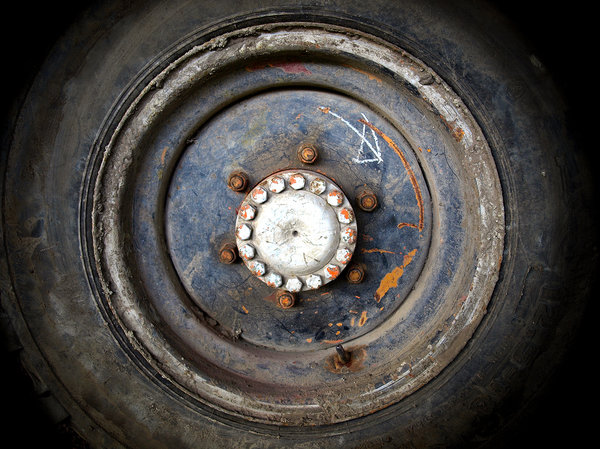
Dangers of Old Tires

There is little quality control in the used car industry, and just because a tire looks like it is in perfect shape does not mean it's safe. Many people rely on the tread depth to determine its condition, but a tire could look completely brand-new, have never been used, and have never touched the ground, but be over-aged to the point where the rubber compounds cannot support the weight of your car. 

What happens as a car ages?
  • Rubber compounds oxidizes, causing cracks in the rubber develop over time. The internal adhesive bonds between the various layers of the tire begin to break down, and the steels belts in the tread may separate from the rest of the tire.
  • The tire becomes worn and more susceptible to malfunction or puncture.
What are the dangers of old tires?
  • Function. Old tires have a worn-out tread, causing reduced traction on the road and requiring a longer stopping distance.
  • Storage. The conditions of storage for spare tires can deteriorate the tires. Mounting the spare tire underneath or behind the vehicle exposes it to dirt and other elements, while storing in the trunk is comparable to baking it in a miniature oven. 
  • Blown tires. An old tire has a higher chance of puncture or completely blowing out, which can cause loss of vehicle control.
  • Temperature and weather. Worn tires can be especially dangerous during times of bad weather, such as rainstorms, since the reduced grip can cause sliding or hydroplaning. Warmer/coastal climates and exposure to sunlight can hasten the aging process.
  • Use. The duration of the tires can depend on the nature of its use. Rapid braking and acceleration, road conditions, bumping into curbs, and irregular maintenance can contribute to decline in quality.
How can I determine the age of my tires?
  • All tires are stamped at the factory with a Department of Transportation (DOT) code with 11-14 digits on the sidewall. For the last four digits, the first two represents the week of manufacture and the last two represents the year. Even when you are buying new cars, you should check the date to ensure that the tires were not stored in a warehouse for a long time prior to delivery. If it was manufactured more than 6 months earlier, consider asking for newer tires, since tires are still subject to oxidation even when not in use.
All in all, while it may be tempting to save money by equipping your vehicle with your old or used tires, consider the risks. Driving on unsafe tires can lead to serious accidents, and you should never take a chance when it comes to your vehicle or, more importantly, your own safety.

Picture courtesy: http://l.rgbimg.com/cache1n8lEo/users/j/ja/jazza/600/2djsV4n.jpg

Tuesday, July 2, 2013

How to Remove Bumper Stickers


Bumper stickers are a common accessory to our cars. They can be clever, encouraging, negative, or make a statement. However, they are often very difficult to remove from your car. It is important to remember that they are super stickers that have bonded to the paint on your car.

Here are a few techniques to get those pesky bumper stickers off your car.
  • Boiling Water: pour hot water over the bumper sticker to head up the adhesive and try to peel slowly from the corners.
  • Chemicals: There are multiple chemical solutions to remove bumper stickers
    • Vinegar:Take a cloth soaked in vinegar and place over the sticker for 3-5 minutes. Then peel.
    • Solution: Take some rubbing alcohol and dish soap and soak the sticker for 10 minutes.
    • WD-40: If you have an corner that you can peel back from the sticker, try to lubricate the area underneath with some WD-40. Continue to apply the lubricant as your peel back the sticker. This should help in breaking the seal of the sticker.
  • Blow Dryer: Heat the sticker for 30 seconds or more. Avoid high heat, as this will damage your paint.

Bumper stickers can be a fun way to make a statement with your car. However, the best way to to prevent damage to your car is to avoid bumper stickers altogether. The longer a sticker is left on, the harder it is to remove and the more likely it is to cause permanent damage to your car's paint job.

Avoid:
  • Very caustic or acidic chemicals: these will damage the paint of your car
  • Peeling the sticker straight up. Make sure that when you are peeling the sticker off, pull the sticker back on itself and pull at an angle.
  • Very high heat. While heat is good at loosening the adhesive, it can also cause damage to your paint.
  • Razor blades. Yes, it is tempting to grab a razor blade to scrape off the sticker and the little bits it leave behind, however, your paint can easily be scratched by the sharp blade.   


    Picture courtesy: https://i.chzbgr.com/maxW500/6394720256/h179D18F9/

Tuesday, June 25, 2013

Garage Storage and Organization


A garage is often the optimal place to store not only your car, but also off-season belongings, car maintenance supplies, bicycles, and much more. However, if you're having difficulty storing your single most important item  – namely, your car – then it is time for some serious garage reorganization.

Step 1: Clean
  • Everything starts with a clean and hygienic working area. Take everything out of garage and give it a thorough cleaning, especially by wiping off dust, cleaning up oil spills, changing burnt-out lightbulbs, and potentially repainting the garage walls. 
Step 2: Assess
  • Go through your belongings. Decide what to keep, and what to discard or donate to charity. A good method is to discard the items you haven't used in two years and, of course, those that are broken or trash (such as empty paint cans or cleaning supply bottles).
Step 3: Group
  • Group items together by their purpose. Have separate sections for home improvement tools, sports equipment, seasonal items, gardening tools, et cetera. 
Step 4: Store
  • Always place items where they are easy to see and reach. Put the the items you use most frequently below eye level, and seasonal items (such as Christmas lights) higher up.
  • Smaller miscellaneous items can be placed in see-through storage containers or baskets that can be labeled and stacked, while larger items (such as sports equipment or gardening/handling tools) can be placed on durable hooks on pegboards or slatted wall panels. Other items (such as boots, watering cans, and soil) can be placed on adjustable shelves to accommodate different-sized items by remounting.
Step 5: Maintain
  • Make a commitment and be conscientious in returning items to their designated spaces after use. Those extra few seconds could be the difference between a clean, tidy garage space and one that is, once again, dirty, cluttered, and chaotic. Having an organized garage will not only make you feel better, both physically and mentally, but it will also make your life a lot easier!
Picture courtesy: http://stagetecture.com/wp-content/uploads/2012/07/organized-garage2-e1342443677697.jpg

Thursday, June 20, 2013

How to Properly Wash Your Car


There is nothing like a shiny clean car! However, we have all neglected washing our car at some point.

If you have a darker car, you have probably noticed these swirls or spiderweb-like scratches on the surface of your paint. These are micro scratches. They are usually caused by improper washing and drying techniques. We all get lazy and skip washing our cars and if we get really desperate, we will go to the surprisingly damaging automatic car wash. Never again! Lets clean our cars and do it the right way!

While it is important to wash your car often, you must also be careful that the dirt and grim on your car doesn't damage the paint when you are washing it off.

Here are some tips to remember:
  • Wash your car regularly: do try to wash your car once or twice a month.
  • Try to wash your car in the shade and away from the wind. This prevents the shampoo from drying on the car and dust particles from sticking to your paint and scratching it up.
  • Wash it carefully: use gentle materials. Start with a thorough rinse of the surface before you start washing. A sea sponge is a great tool for gently removing dirt and grime from your car. Look for wash mitts or sponges that have a high absorbency and are soft.
  • Wash your car from top to bottom to prevent contamination. The bottom of your car tends to be the dirtiest. Save it for last to prevent spreading it to other parts of your car.
  • Avoid using dish soap. Use soap that is designed for cars to minimize damage to your paint.
  • Use 2 buckets to wash your car. One to remove dirt from your sponge and one for soapy water. After you use your sponge to suds up your car, dip it in a bucket of water to remove the dirt before dipping it into the soapy water. This prevents the dirt from scratching up your paint. Keep your sponge as clean as possible throughout the washing process.
  • When you wash your wheels or particularly grimy areas, use a different set of materials to avoid cross contamination of your cleaning materials for future use.
  • Dry it carefully: Using a regular dish towel can scratch up your paint. Try using a waffle towel or a microfiber towel wick away the water.
Overall, most of us don't have time to be that person detailing their car daily. Nor should we. Keeping basic maintenance is easy to do. This diligence will ensure that our cars last us as long as possible. Don't be that person with the “Wash Me” sign written in dirt. Protect your paint and your car with regular washing.

Picture courtesy: http://www.carzy.co.in/blog/wp-content/uploads/2012/04/car-wash-220.jpg

Tuesday, June 18, 2013

How to Extend the Life of Your Car


Many people are concerned with getting the most out of their car. A car is usually an individual's second most expensive investment behind their home. In order to protect your car and ensure that it lasts a long time, here are some important tips.

Most importantly: Read the manual.
This sounds simple, but for many, our manual sits in our glove compartment ignored. Take some time to read your car manual and learn about scheduled maintenance and other important information. Your manual will tell you how often you should get your oil changed, what your tire pressure should be, what fuel octane should be used, etc. Getting to know your car allows you to care for it better and more efficiently. This will help your car last longer and save you from expensive and unnecessary repairs.

Store your car well. Try to park your car in the shade or in a garage to protect it from the elements. If you are storing your car for extended periods of time, contact your mechanic for suggestions.

Check your oil and fluid levels. Many of the containers are clear or have a dipstick with level measurements. Take a look at your manual or speak to your mechanic to learn more about fluid levels.

Stay on top of your maintenance. Find out how often you should be bringing your car in. Keeping your car up-to-date on maintenance and repairs can prevent future car trouble and can extend the life of your vehicle. Here are some tips to keep your car in great shape.

Check your tire pressure and get your tires rotated. Low riding tires can decrease the life of the tire, decrease fuel economy, and effect stoppage time. Rotating your tires prevents the tires from wearing unevenly and allow you to get the most out of your tires.

Use your parking break. We often don't use our parking break unless we are on a hill. However, neglecting to use your parking break can cause unnecessary damage to your breaks and can decrease their life.

Wash your car regularly. Many people put off washing their car. Rust and corrosion can set in from dirt, acidic conditions, and scratches. Here's how to properly wash your car.


Tuesday, June 11, 2013

How To Clean Your Headlights


Headlights play an essential role in the operation of your car, especially during these dark winter months where the days are shorter and the skies grow cloudy. Clean and clear headlights might make the difference in spotting oncoming hazards.. Just like any part of your car, headlights can lose their luster and performance with age. Here are some ways to return your dim and dirty headlights to the brightness needed for safe winter driving.

Tip: It is important to note that headlights dim through a natural oxidization of the lenses, not just avoidable dirt and grime.

Homemade Remedy: While this solution is a bit more inexpensive, the effectiveness in cleaning your headlights varies from car to car. In order to remove this headlight 'rust' you'll need a gritty solution for polishing.

1 box of baking soda
1 tube of toothpaste
1 towel
¼ cup of dishwashing detergent

1: Use dishwashing detergent to wash away the residual dirt from the headlights. Then wipe dry with a towel.

2: Mix baking soda and toothpaste, knead solution thoroughly.

3: Apply paste to headlights with a towel. Rub in circular movements. Apply pressure to grind away oxidized particles.

4: Rinse with water and baking soda.

Store Bought Remedy: There are many products available at auto shops that claim they can brighten headlights and polish lenses. While they vary in price, their effectiveness varies as well. It is a good idea to read product reviews or talk to a service professional before purchasing these products. They provide a solution that you apply to your headlights similar to the homemade method.

Certified Headlight Cleaning: Contact your local dealership to insure that your headlights are completely clean and returned to a nearly new working condition. Service professionals at Hanlees guarantee a pristine headlight renewal and cleaning, using the best product to match your car's specific make and materials.

Good luck and be safe on the road this winter season!

Picture courtesy: http://t2.gstatic.com/images?q=tbn:ANd9GcT94KrlUgAXAtqPi-Odh_k6w31JV2mynDyfjr13Otejd9pFmbKvtg

Thursday, June 6, 2013

5 Small Ways to Keep Your Car in Great Shape

1. The break-in period
After purchasing your new car, it is recommended to treat it with a little extra care for the first 1,000 miles. This initial period is known as the break-in period. Here are some things to remember while driving around in your new ride.
  • During this break-in period, (approximately the first 1,000 miles), keep your speed under 55 mph, or the speed recommended by your car's manufacturer. This can allow you engine to properly “break-in” like a well-oiled baseball glove. 
  • Use only light to medium acceleration for the first few hours of driving. Consult your manufacturer's info for more information. A good range of acceleration is below the 3,000 rpm range. 
  • Avoid heavy loads (e.g. towing trailers, loading up the roof rack or trunk with heavy materials)
  • Do not allow your car to idle for long periods of time. This is good practice for any car and for as long as you own the car. Oil pressure generated while idling may restrict the flow of oil to every part of the engine. 

2. Continue to drive with care
Taking care of your car should not stop after your break-in period. Driving with care can extend the life of your vehicle and extend the length of time between repairs. Here are some additional suggestions to consider:
  • Do not race your car's engine after starting it up. 
  • Accelerate slowly when you begin you drive. Most damage done by high acceleration is done within the first 10-20 minutes of operation. 
  • Less strain can be put on your transmission by shifting it into neutral while at red lights. 
  • When turning your steering wheel, don't hold it at extreme right or extreme left positions. Doing so can damage the power-steering pump. 

3. Refrain from using cheap gas: 
While the idea of cheapest gas prices may be temping, you should do you best to use reputable service stations. Ask the attendant whether or not the gas is filtered at the pump and how often they are changed. Furthermore, some stations may not filter their gasoline or worse, use poor by-products to stretch out their gas.


4. Don't refuel if you see the tanker
If you pull into the gas station and see the tanker refilling the tanks, come back another time. As the station's storage tanks are being filled, turbulence can cause sediment at the bottom of the tank to stir around. If you are refueling at this time, your car could pick up some of this sediment and lead to clogged fuel filter and fuel injectors.


5. Loosen the load on your key chain
Does your car key get lost amongst dozens of other keys? All this excess weight can put a lot of pressure and strain on your car's ignition tumbler. Additionally, the bumps and turns caused by driving can put extra strain on the ignition switch. Lightening your key chain can help prevent your ignition switch from failing and leaving you stranded someday.

Tuesday, June 4, 2013

Future Cars


Although we may not yet be in the age of flying cars zipping from city to city powered only by the sun, there are many innovations that might soon revolutionize the way we travel via automobile in the near future. This, of course, will only keep us interested until Jet Packs and Hover Boards are finally invented. Cowabunga!

Here are some new technologies that may redefine our driving experience in the years to come.

Self-Driving Cars

“Engage Auto-Pilot” you say as you lean back in the driver's seat to switch on the television and make yourself a PB&J sandwich. This scene might feel like it's out of science fiction, but the fact is that self-driving technology is the most plausible innovation in our car-driving future. There are already many prototypes in existence, pioneered by Google's 'driverless cars'. First invented as a way to provide street view photos for Google Maps, these cars have been relatively successful in utilizing a cutting-edge combination of cameras, sensors, and advanced computing to safely operate on certain streets completely driver-free.

Transparent Trucks

Massive semi-trucks have been a constant source of danger on the road. Their cargo, often a few cars or more in length, creates a moving wall that blocks vision and mobility on freeways. These blind spots amount to one of the leading causes of accidents and fatalities while driving. A new technology seeks to remedy this problem by projecting the corresponding image onto the broad sides of the freight trailer. This way the truck becomes a giant movie screen featuring a view of vehicles or hazards that would normally be obstructed. While the science behind this type of projection still has a long way to go before it's affordable enough to be slapped on the sides of a semi-truck, huge breakthroughs are being made every year.

Holographic Windshields

A windshield that notifies you of oncoming hazards by pointing them out with flashing arrows? Or that illustrates a better route by rendering a dotted line on the road ahead? You've probably seen things like this in nearly every sci-fi movie – a screen that projects useful information directly onto your line of sight. The truth is that these 'augmented reality' windshields are already a reality in some luxury cars available today. While current technology can only project information such as your speedometer and fuel gauge, eventually engineers hope to integrate advanced computers and sensors to interact with the holographic display. Thus your car would become a sort of control center, using symbols and text to inform you about essential driving information as needed in real-time. The only disadvantage is that you might start driving like you're inside a video game.

Picture courtesy: https://blogger.googleusercontent.com/img/b/R29vZ2xl/AVvXsEh1xeS5as1n1vLFRgaCIbYUOdiy56Rdgu2co7MYN4q21WYmbQVM_y-x9ZgAyJ9i3ScVopu-vD6BKKyU3SFXH2DJnrgPZepfUFvx4uAYzU5bOJt3L3v4VfASmy3JbQOKW2bZsJIaX8r3bMw/s1600/future.jpg