Tuesday, October 1, 2013

Automatic Transmission Fluid Service

Do You Need An Automatic-Transmission Fluid Service?

Does your vehicle's automatic transmission experience:
  • Hard Shifting
  • Slippage or Chatter
  • Frequent Trailer Towing
  • High Operating Temperatures
  • Late or Infrequent A.T.F. Services? 
The Problem
More than one-third of all transmission problems are caused by fluid breakdown. More than just a lubricant, Automatic-Transmission Fluid (ATF) is actually a vital component in the operation of an automatic transmission. Under normal use, heat and friction in the transmission are a catalyst for oxidation and acid buildup. The result is the formation of sludge and varnish deposits in the system.
Once this process starts, these contaminates along with eroded metal particles, can build up in critical areas and clog filters, restricting the flow of transmission fluid. Traditional ATF services only remove about 30% of the old, oxidized fluid, leaving behind large amounts of contaminants and debris. If the transmission is not serviced properly, serious malfunction or even system failure can occur, causing costly repairs.
  
To learn more about the condition of your transmission look closely at the fluid on the dipstick.


Condition of Fluid
  • Dark Color
  • Varnished or Tacky
  • Pink, Milky Color
  • Metal Particles in Fluid
  • Burnt Odor

      
Possible Cause
  • Clutch-Pack Slippage
  •  Overheating
  • Water/Coolant Contamination
  • Internal Damage
  • Transmission Overheating and/or Slippage
An experienced technician, using a specially designed machine, will perform an Automatic-Transmission-System Fluid Exchange Service. First, ATF Cleaner is added to the old fluid system to clean and suspend residue, wear particles and varnish deposits. The vehicle's automatic transmission system is then attached to the machine.

The machine evacuates the contaminated fluid from the entire system, including the torque converter, housing, cooler and lines. Simultaneously, new, clean, ATF is introduced into the system. To complete the service, ATF Supplement is added to help fortify new fluid, resist oxidation breakdown, and keep seals soft and pliable.

An ATF service can help to:
  • Extend Transmission Life
  • Revitalize Seals & O-Rings
  • Reduce Hard Shifting & Slippage
  • Avoid Costly Repairs

Thursday, September 26, 2013

Cooling-System Flush Service

Are You Loosing Your Cool?!
Traditional “Drain & Fill” Services Are Not Enough!

Does Your Vehicle's Cooling System Experience
ñ     Overheating
ñ     Constant Stop & Go Driving
ñ     Frequent Trailer Towing
ñ     Extreme Driving Conditions
ñ     Infrequent Radiator Services

The Problem
            Cooling-system failure is one of the leading causes of mechanical breakdown. Over time, antifreeze/coolant can degrade, causing a loss in it's protective qualities. This causes rust, sludge and scale buildup in the hoses, radiator, water pump, heater core and engine.
            The traditional radiator "drain-and-fill" service leaves approximately 50% of the contaminated coolant behind. The residue formed can interrupt the flow of coolant throughout the system. This can cause the engine to run hot and allow corrosion deposits to deteriorate the metal surfaces. Left untreated, overheating problems, internal leaks and possible system failure can occur causing costly repairs.

The Remedy:
            An experienced technician, using a specially designed machine, will perform a Cooling-System Flush Service. First, Cooling-System Cleaner/ Flush is added to the old coolant and circulated throughout the entire cooling system, suspending rust, sludge and scale. The vehicles cooling system is then attached to a machine which uses a pumping action to flush the entire system.

            During the next step, contaminants along with the used coolant are extracted. The system is then filled with new coolant. To complete the service, Cooling-System conditioners are added to help resist corrosion, lubricate the water pump and help increase the heat-transfer properties of the cooling system by dissipating heat more effectively.

This Service Can Help To:
  • Prevent Overheating Problems
  • Lubricate Water Pump
  • Prevent Minor Leaks
  • Avoid Costly Repairs

Tuesday, September 24, 2013

How to Respond to Car Theft

Remember the story about how six Toyota Highlanders were stolen from a Canadian neighborhood in one night? If you're one of the unlucky victims of car theft, there are several important steps to take in order to respond in the best manner.

  1. Make sure your car is actually gone
    • Everyone has "lost" their car in a parking lot at one point. That car isn't stolen; you just can't find it. Check around the different levels and rows, and determine whether your car could have been towed or impounded.
  2. Contact the police as soon as possible
    • Note down the report number. The sooner the police start looking for it, the more likely it will be found; most stolen cars are recovered within 48 hours of the theft.
  3. Call your insurance company
    • Have the following information at hand: when/where you last saw your vehicle, certificate of title for the vehicle, year/make/model, vehicle identification mode, the name of the police department at which you filed your report, the police report number, list of personal property stolen with your vehicle, and if your vehicle was financed/leased. If the vehicle is recovered, let your insurance company know ASAP.
  4. Learn from the experience
    1. In the future, always lock your car, don't park it in out-of-the-way locations, don't leave it outside overnight, have a security system installed, never leave your car running unattended, never leave valuables in plain sight in your car, et cetera.

Thursday, September 19, 2013

How to Drive Safely at Night

Plenty of us hate driving at night - we're tired, we want to get home, it's dark, and, frankly, we just want to get home. However, statistics from the National Highway Traffic Safety Administration show that while only 25% of driving is done at night, more than 50% of all driving fatalities occur then. Fortunately, as always, knowledge is power: understand the precautions you can take to heighten your driving safety... at all hours.

Reasons for higher risks after 6:00PM:
  • Vision is severely limited
    • The darkness decreases depth perception and peripheral vision, as well as color recognition
    • Pupils dilate in low light, often blurring vision
    • Glare of headlights from other vehicles can temporarily blind you, causing temporary blindness, dizziness, and confusion
  • Most people are weary and tired, causes a lack of focus or irritation
  • Roaming wildlife and intoxicated drivers are more prevalent at night
What you can do:
  • Same precautions as during the day: put on your seatbelt, adjust your seat and mirrors, put away your personal electronics, go the speed limit, and always be alert
  • Turn on your headlights. Make sure they are properly aligned (not uneven or pointed lower than necessary); if they are not, they will diminish road coverage and blind oncoming traffic. Clean road grime from your headlights often, especially if they are old, yellowed, and faded. You can buy a headlights polish kit to remove the haze. 
    • Only use your high-beam lights when you are traveling in rural areas. Make sure they are off if you approach traffic or a hill, since they can blind other drivers.
  • Dim your instrument panel and dashboard lights. If they are too bright, you may compromise your forward vision.
  • Flip your rearview mirror. Some mirrors have night settings that can be turned on by flipping a small lever at the bottom. Lights in the glass will appear dimmer and thus less bothersome.
  • Maintain a greater distance between you and the car in front of you. Distances are more difficult to gauge at night.
  • Avoid looking directly at oncoming headlights. Bright lights will disrupt your concentration at night. Instead, look down at to the right, gazing at the white line on the side of the road or where the pavement meets the shoulder. Use that to track your lane instead of the left side; you can still see other vehicles with your peripheral vision, but wont' be bothered by the glare.
  • Look for retinas. You can often see light reflecting off an animal's eyes long before you see the animal itself. When it comes to large animals such as deer, slow down as quickly as you can. If you try to steer around them, they may follow your lights and move in front of you.
  • Take frequent breaks if you are driving at night for a long period of time. It will reduce fatigue and give your eyes recovery time.
  • Schedule periodic vision checks. ALmost 90% of driver reactions depend on vision. Be sure to wear prescription glasses (especially if they have anti-reflective coating) or contacts as needed.
Picture courtesy: 416496806_640.jpg

Tuesday, September 17, 2013

How to Organize Your Messy Car


For many people, a car is more than just a mode of transportation; it's a temporary home away from home. Over time, the interior of your car can be filled with important things and junk alike - from bank statements to leftover McDonald's. Setting aside an hour or to to tackle a cluttered car can easily make more room for passengers and cargo. And just like an organized home, an organized car makes you feel better and saves you time.

1) Clean out your car
  • Take everything out of your car, including car seats and miscallaneous items stored in the glovebox, door pockets, and trunk. If it's not attached, it comes out. Collect and throw away all trash/garbage, and set anything you think you'll need to the side, outside the car. This is a great time to wash and vacuum the interior of your ar as well.
2) Analyze and sort
  • There are three main categories – items you use all the time, items you use occasionally, and items you'll need in an emergency – and anything that doesn't fall into those categories should be stored elsewhere. Then, prioritize the items in each group: which items do you need at hand, and which can be delegated to the back rows? Keep in mind that seasonal items (such as ice scrapers and tire chains) can be packed away for the summer.
3) Store it away
  • Your glove compartment should contain your car manual, small pocket flashlight, your registration and insurance information, and perhaps a small notebook containing important phone numbers (such as emergency contacts and car repairs). Small items such as batteries can be put in resealable bags and stored in the glove compartment as well.
  • Place your CDs in a plastic container (such as Ziploc's 9.5 cup rectangular storage container) or a CD container, and keep it in an area that is accessible, but out of the way. Try to limit the number of CDs to a realistic amount; most people don't listen to all the CD they keep in their cars.
  • Maps and guide books (if necessary) can be put in the side pockets of the passenger's side door.
  • If you have kids who carry toys and games in the car, you may want a pocket organization that can fit over the back of your front seats. That way, the items won't be rolling around on the floor.
  • Use separate bins or crates for each category of items you typically keep in the trunk. These might include roadside emergency equipment/supplies, sporting/gym equipment, and groceries.
4) Maintain
  • Clean your car out every one or two weeks by gathering any items that don't permanently belong. For those items remaining in the car, make sure they are in their appropriate locations. A good time to do this would be when you stop for gas and your tank is still filling up, especially since most gas stations have garbage cans next to each gas pump.
Picture courtesy: https://encrypted-tbn1.gstatic.com/images?q=tbn:ANd9GcRnh4siE8Cy9sIyyiioXY7uf8MNHAIQQ6k0a4BXZP7x62QjslMc-w

Tuesday, September 10, 2013

How to Prepare Your Car for Storage

People have many reasons for putting a car into long-term storage: preventing winter damage, long-term vacations, overseas jobs, military deployment, emotional attachment, et cetera. No matter what the reason, you want the car to when you are ready to use it, and you want it in good shape. Here are some tips as to how to achieve that.

Location and coverage
In order to discourage rust, corrosion, and sun damage, you want to choose an indoors location that is dark and dry, with a stable temperature; the ideal place is in a garage or indoor public storage facility. If you do have to store it outside, be sure to find a durable, weatherproof car cover to maintain the paint and limit exposure to the elements; choose wisely, since a defective cover can trap moisture and grit. Be sure to cover any large gaps where critters (particularly rats) can enter, such as the exhaust pipe or air intake.

Cleaning
Wash and wax the exterior of the car to clean and protect the paint; any leftover dirt or contaminants (such as water stains, bird droppings, mud, grease, or tar) will corrode and rust. Clean and vacuum the interior as well, since, again, dirt and debris can cause damage through mold and mildew if left alone for an extended period of time.

Maintain Tires
Make sure your tires are inflated to the recommended pressure to prevent flat spots. You can use plastic sheeting to prevent moisture from degrading the tires. You may consider taking off the wheels entirely and placing the car on jack stands at all four corners.

Top Off Fluids
You should have fresh fluids for your fuel systems. Oil and filter, anti-freeze, gas, power-steering fluid, tranny fluid, and brake fluids should all be chnaged right before storage. Old fluids, particularly oil and antifreeze, can become acidic acidic and eat away at the insides of your car, potentially causing mild corrosion. Full fluid reservoirs allow no room for condensation to occur. You should purchase a fuel stabilizer as well to prevent ethanol buildup and protect the engine from gum, varnish, and rust.

Keep the Battery Charged
Most newer vehicles are equipped with advanced computer systems that require constant power, and an unattended battery will eventually lose its charge. The low-tech solution is to disconnect the negative battery cable, which might cause you to lose your settinngs such as stereo presets and time. Otherwise, you can purchase a battery tender (a.k.a. trickle charger) that hooks up your car battery to a wall outlet, delivering just enough electrical power to prevent discharging.

Disengage the Brake
Do not use your parking brake when keeping your car in storage, since the brake pads might fuse with the rotors if in contact too long. Instead, you can use a chock (a.k.a. tire stopper) to keep your vehicle in place. Leave the gear in neutral for manual transmissions.

Thursday, September 5, 2013

How to Change Your Air Filter

Your car needs air just as much as it needs fuel, and air filters help separate the good from the bad, keeping the inside of the engine free from dust and insects. Regularly replacing and cleaning your air filter is an integral aspect of car maintenance, and is generally a quick and inexpensive process that you can do yourself.

1) Obtain the correct replacement filter. 
It should be the same as the one you replace, and you can consult your owner's manual or auto parts store for assistance. Most are just $10-15.

2) Park the vehicle
Park the car on level ground in the shade, apply the parking brake, and turn off the ignition. Prop up the hood and let the engine cool for a few minutes.

3) Locate the air filter
The air filter is typically under the hood, enclosed in a black plastic casing (the cold air collector box) near the front of the engine compartment. It should be the largest non-metal assembly you see.

3) Open the air filter box and remove the dirty air filter
Unclasp the big metal clips that hold down the box and open the box. Some models have hose clamps and screws, others have wing nuts, and most are clamped on with a quick release system. Be sure to keep screws, fasteners, and other removable parts in a safe location, such as in a Ziploc bag on the front seat.

4) Look over the old filter
Remove the original filter; it is not fastened down. To determine whether your filter really does need replacing, hold it up to the sunlight or to a strong light. Do you see a lot of accumulate dirt and grime in the crevices? Is the orange/yellow paper mostly dirty in the center? You can try dropping it lightly on a hard surface to jar some dirt loose or even lightly vacuum, but if it is still too dirty to see through, you should replace it.

5) Replace with the new filter
Simply insert the new air filter into the box, making sure it sits snugly with the rubber rims facing up and sealed by the edges. Put the lid back onto the box, refasten all clips, and you're done!

Picture courtesy: http://t0.gstatic.com/images?q=tbn:ANd9GcSQ_2PiDcBIGnvoX_2O6LvjyYbho80Hmq9nwjLYKn2T2_BCjBVGbA

Tuesday, September 3, 2013

5 More Tips to Keep Your Car in Great Shape

In addition to the five tips from earlier, here are five more tips you can follow to keep your car in tip-top shape as long as possible:

1. Keep an auto log:
Use your car's odometer to check the mileage of your car at the time of your fill up (e.g. 10,000 miles). Next, fill your car up (completely full). Then, at your next fill-up, check your car mileage again (e.g. 10,300 miles). Finally, , note how much gas you use to fill your car back up (10 gallons). The difference between the two mileages (300 miles) divided by the number of gallons you fill up gives you the miles per gallon of your car (e.g. 300miles / 10gallons = 30 mpg). Additionally, , being more conscientious about your gas consumption can help you conserve more gas and thus more money.. Keeping an auto log to record your gas fill-ups and mileage can help you detect early signs of problems; if you notice worsening gas mileage, contact a service adviser to address the problem.

2. Park in the shade:
Although a garage would be the ideal place to park your car,, parking in the shade is advisable to minimize interior damage caused by UV sunlight. If parking under trees leads to bird droppings, using an interior collapsible car shade can minimize the sun's damage. As a result, you will have a car that is cooler on hot sunny days, requires less AC usage, and lasts longer.

3. Clean the inside too:
At first glance, the exterior cleanliness of our vehicle may be the most noticeable thing. However, the exterior appearance is quickly forgotten as we step inside our vehicle. The inside of our vehicle is where we spend all our time, and yet it can easily be the most neglected aspect of a clean car.. Try to vacuum and sponge your interior every time you wash your car.. Spilled liquids, dirt, and oils can be corrosive to your car's interior, and you should vacuum your interior thoroughly with a powerful vacuum, using attachments to reach difficult places. You can wpe down plastic and vinyl surfaces with cleaning solutions that you can pick up at your local dealership.

4. Let floor mats take winters beating:
You can use floor mats to help maintain the cleanliness of your interior as well. Rubber mats can take the best beatings and are ideal for easy mud and dirt clean up. Carpet mats work as well, but may require a little more maintenance and scrubbing to keep clean. When mats begin to wear through or are beyond keeping clean, they can easily be replaced.

5. Wash mats:
Now that your are remembering to clean the interior of your vehicle as well, let's discuss how to clean your floor mats. The easiest way to clean them is with a de-greaser and a pressure washer to blast all the dirt and build-up off. If a pressure washer is not available, you can vacuum the mats and follow up with some scrubbing and rinsing from a hose. Be advised: while using soap on mats can help remove stains, the soap may not be so easy to remove. As a result, you may want to try a stain remover and follow the given directions. Lastly, , be sure to let the mats air out thoroughly before putting them back in.

Tuesday, August 27, 2013

Buying New vs. Used Cars

After reading the article "Am I Ready for a New Car" and finally coming to the decision to replace your current car, often the next question to ask yourself is this: should I buy a new car... or a used car?
Unfortunately, there is no one-size-fits-all answer; everything is subjective. However, here are several advantages of each that can help you with the decision-making process.

New cars:
  • Peace of mind. New cars are less likely to break down and remain mechanically sound for many years after purchase. The new vehicle likely won't need new tires, a battery, exhaust system or brakes during the first few years of ownership or longer. Competitive warranties can help cover repair costs, and can range from 3-5 years or cover a certain number of kilometers. In addition to a comprehensive warranty, virtually all mainstream new cars come with free roadside assistance while the vehicle remains under warranty. Furthermore, if you encounter significant problems, state lemon laws allow you to replace your new car or get your money back, if you can prove that your car is a "lemon" (a defect). 
  • Features. New cars often come with the latest, coolest features. For example, they are more likely have better safety features, be more fuel efficient, and emit fewer and less harmful chemicals into the environment. They can also be made to order and customized according to your individual needs. 
  • Financing. Loans for new vehicles are easier to secure and come with cheaper rates, since its current value is absolute and its eventual value is easier to gauge (which means less guesswork involved for lenders). If you have good credit (720+), you may have fewer problems buying a new car with little or no down payment, and many manufacturers offer rebates, cash incentives, and discounted financing. 

Used cars:
  • Increased choice. There are thousands of used cars available for purchase, ranging from newer models to collectable cars to well-maintained and serviced older cars. The key is in the research, most of which can be accomplished online. 
  • Better prices. There are multiple reasons why used cars are cheaper than new ones. First of all is depreciation, since most cars lose up to 20% of its value the first time it is driven out of the dealer's parking lot, and up to 40% of its value within its first three years. Dealers also need to make a profit and pay for overheads such as premises and staff; used cars are often bought privately, which allows you to bypass the dealer mark-up. Furthermore, insurance rates are often lower for used cars. However, be sure to take ongoing motor costs into account when comparing prices, since replacement parts and maintenance can be costly.
Picture courtesy: https://blogger.googleusercontent.com/img/b/R29vZ2xl/AVvXsEgfkxZf4XMM8305hADJlC2RsVUZvSVvqNiK1-rg4R3Prd6lo86-Bnah-crfXEe0RUuBj-tkmgdD2-w3l23YwtBkkg203BiL4hBFPC0mBtLL-bdJRG7kiTjyDmGLJStDQ4ygTFuiSmCs-hE/s1600/old+and+new.jpg

Thursday, August 22, 2013

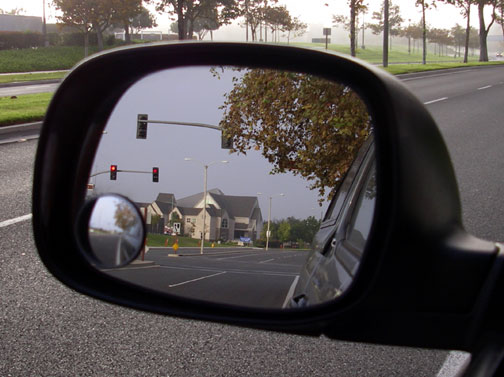
How to Set Your Rear View Mirrors


You may have set your rear view mirrors years ago and have since forgotten all about their position. Additionally, there are several different preferences on how to set you mirrors in correct positions. Here is our suggestion on where and how to set them to help improve visibility of your car's blind spots.

Step 1: Set your interior rear-view mirror as you usually would with the center of the road in the center of your mirror.

Step 2: Learn your head to the left so it is touching/nearly touching the drivers side window. From this position adjust your drivers-side side mirror so you can just see the back quarter panel of your vehicle. When you return your head to its normal driving position you should see very little to none of the side of your car in the mirror.

Step 3: Lean the same distance to the right (until your head is nearly in the center of the front seats) and adjust the right side mirrors in the same manner. And that's it!

If you are not accustomed to your mirrors being in this position, it may feel odd at first. However, once you learn to rely on your rear-view mirror and what your side-view mirrors are showing, you will find that they provide you with a whole lot more useful information about the space around your vehicle. Ultimately, your car's blind spots should be eliminated and provide you with a safer ride. In addition remember to check over your shoulder and signal before you change lanes as well. As always, drive safely and obey all traffic laws.

Picture courtesy: http://www.markdroberts.com/images/ipc-sideview-mirror.jpg