Tuesday, August 27, 2013

Buying New vs. Used Cars

After reading the article "Am I Ready for a New Car" and finally coming to the decision to replace your current car, often the next question to ask yourself is this: should I buy a new car... or a used car?
Unfortunately, there is no one-size-fits-all answer; everything is subjective. However, here are several advantages of each that can help you with the decision-making process.

New cars:
  • Peace of mind. New cars are less likely to break down and remain mechanically sound for many years after purchase. The new vehicle likely won't need new tires, a battery, exhaust system or brakes during the first few years of ownership or longer. Competitive warranties can help cover repair costs, and can range from 3-5 years or cover a certain number of kilometers. In addition to a comprehensive warranty, virtually all mainstream new cars come with free roadside assistance while the vehicle remains under warranty. Furthermore, if you encounter significant problems, state lemon laws allow you to replace your new car or get your money back, if you can prove that your car is a "lemon" (a defect). 
  • Features. New cars often come with the latest, coolest features. For example, they are more likely have better safety features, be more fuel efficient, and emit fewer and less harmful chemicals into the environment. They can also be made to order and customized according to your individual needs. 
  • Financing. Loans for new vehicles are easier to secure and come with cheaper rates, since its current value is absolute and its eventual value is easier to gauge (which means less guesswork involved for lenders). If you have good credit (720+), you may have fewer problems buying a new car with little or no down payment, and many manufacturers offer rebates, cash incentives, and discounted financing. 

Used cars:
  • Increased choice. There are thousands of used cars available for purchase, ranging from newer models to collectable cars to well-maintained and serviced older cars. The key is in the research, most of which can be accomplished online. 
  • Better prices. There are multiple reasons why used cars are cheaper than new ones. First of all is depreciation, since most cars lose up to 20% of its value the first time it is driven out of the dealer's parking lot, and up to 40% of its value within its first three years. Dealers also need to make a profit and pay for overheads such as premises and staff; used cars are often bought privately, which allows you to bypass the dealer mark-up. Furthermore, insurance rates are often lower for used cars. However, be sure to take ongoing motor costs into account when comparing prices, since replacement parts and maintenance can be costly.
Picture courtesy: https://blogger.googleusercontent.com/img/b/R29vZ2xl/AVvXsEgfkxZf4XMM8305hADJlC2RsVUZvSVvqNiK1-rg4R3Prd6lo86-Bnah-crfXEe0RUuBj-tkmgdD2-w3l23YwtBkkg203BiL4hBFPC0mBtLL-bdJRG7kiTjyDmGLJStDQ4ygTFuiSmCs-hE/s1600/old+and+new.jpg

Thursday, August 22, 2013

How to Set Your Rear View Mirrors


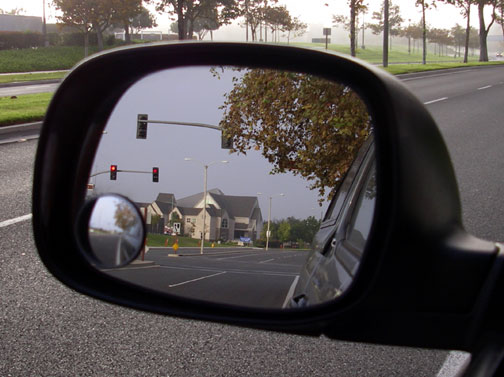
You may have set your rear view mirrors years ago and have since forgotten all about their position. Additionally, there are several different preferences on how to set you mirrors in correct positions. Here is our suggestion on where and how to set them to help improve visibility of your car's blind spots.

Step 1: Set your interior rear-view mirror as you usually would with the center of the road in the center of your mirror.

Step 2: Learn your head to the left so it is touching/nearly touching the drivers side window. From this position adjust your drivers-side side mirror so you can just see the back quarter panel of your vehicle. When you return your head to its normal driving position you should see very little to none of the side of your car in the mirror.

Step 3: Lean the same distance to the right (until your head is nearly in the center of the front seats) and adjust the right side mirrors in the same manner. And that's it!

If you are not accustomed to your mirrors being in this position, it may feel odd at first. However, once you learn to rely on your rear-view mirror and what your side-view mirrors are showing, you will find that they provide you with a whole lot more useful information about the space around your vehicle. Ultimately, your car's blind spots should be eliminated and provide you with a safer ride. In addition remember to check over your shoulder and signal before you change lanes as well. As always, drive safely and obey all traffic laws.

Picture courtesy: http://www.markdroberts.com/images/ipc-sideview-mirror.jpg

Tuesday, August 20, 2013

How to Jump Start a Car

Whether it's because you left the car lights on, the radio running, the keys in the ignition, or simply because it is old, almost all car owners will face the problem of a dead car battery at some point or another. However, this is an easy problem to solve through jump starting your car, and this article will walk you through how to do just that.

What you'll need:
  • Jump leads/cables
  • Another functional car with the same voltage as your own
  • Safety glasses
The steps:
  1. Park the two cars close enough so that the jumper cable can reach both batteries, and turn both cars off (especially the electrical equipment such as lights and radios).
  2. Make sure your battery isn't corroded, leaking or damaged (do not attempt to jump start if any of these conditions hold true; call a professional). Keep metal objects and flammable items away from the battery, and remove all loose clothing (such as long sleeves or scarves). 
  3. Attach one of the red clips of the jump cable to the positive (+) terminal of the dead battery.
  4. Attach the other red clip to the positive terminal of the good battery.
  5. Attach one of the black clips of the jump cable to the negative (-) terminal of the dead battery.
  6. Attach the other black clip to any unpainted metal surface under the hood of the dead car; this can be as small as a bolt of bracket. Do not attach it to the negative terminal.
  7. Start the working car and let it run for 2-3 minutes to build up the dead battery.
  8. Start the dead car, which should have a working battery now.
  9. Remove the jump cables in the reverse order to the way you connected them. Make sure you do not touch them together or against any metal surfaces.

Voila, you're done! Remember: the hardest part is simply remembering which end of the cable goes where. If your car still doesn't start, you may have a more serious problem than a dead battery and should call your mechanic. 


Tuesday, August 13, 2013

How to Spray Paint Your Car


There are several reasons you might want to spray paint your car yourself, such as to save money or to achieve a personalized look. This article will provide some things you should know – both in preparation and in application – before you are ready to simply grab a can and go for it. The task will take some time, money, and devotion, but if you are prepared with the correct guidelines, your car can achieve the same perfect professional look, even if you do it yourself.

What you will need:
  • Newspaper
  • Large-grain sandpaper or sander
  • Painters tape
  • Car spray paint (using spray gun or aerosol paint)
  • Primer
  • Car wax
  • Safety goggles, dusk mask, disposable gloves, old clothing or overalls
What to do:
  1. Preparation. Warm and dry weather conditions are ideal; if this is not possible, a well-ventilated garage can suffice. Using newspapers and tape, sure the surrounding area is well-covered from any possible overspray (such as the floor).
  2. Sand the car. Use the sandpaper or sander to rub over the surface of the car, since paint won't stick to a slick, shiny surface. Finer sandpaper can be used to remove scratches or corrosion. If there are any holes, you will have to use some putty to repair the damage. Apply a rust treatment product if needed; rusted areas should be sanded down to bare metal to prevent it from spreading. Ensure that the car is fully dried and free of dust, dirt, and debris (completely wash the car if needed); any trace of water will mess up the paint later on.
  3. Primer. Apply the primer to help the paint adhere well and make sure you get an even coat. Spray in thin coats and allow some time for drying in between (about 15-minute intervals). Pay special attention to areas with  bare metal and areas near the door and door handles.
  4. Cover your car. Using painters tape and newspaper, tape off any part of your car that you do not want painted. This may include windows, chrome, bumpers, license plate, mirrors, trim, and tires. 
  5. Paint your car. Put on your safety goggles and gloves. Stand with your spray gun about 10 inches away from the car, and spray using a consistent, even motion from side to side, allowing the paint to slowly build up. Multiple light coats are better than one or two thick ones, which can look uneven, and wait about 20 minutes between each application. You should spray different parts of the car at a time – for example, finish the hood first, then the fender, then a door, et cetera.
  6. Finishing touches. You should finish off the painting with one or two clear coats not only for a glossy, finished look, but also for protection from the sun and natural elements (make sure the car is completely dry between coats). As a final touch, you may want to apply a layer of car wax.
Final tips: Take your time and do not rush or take shortcuts during any part of the process, or you may make a mess. When it comes to spray painting, it is wise to practice on a piece of cardboard or sheet metal first. Remember to use good-quality equipment and products, as well as proper safety equipment.

Thursday, August 8, 2013

How to Prevent Rust Damage

Not only is rust unsightly, unsafe, and undesirable, but it also drastically depreciates your car's resale value. Once it begins to form, it continues to spread and is difficult to remove and repair. Therefore, it is important to know how to prevent it from happening, as well as identify the problem and repair your car when it does.

Rust is iron oxide, the product of corrosion, and consists of natural elements such as salt, water, and heat. Rust usually begins through the chips and nicks that tend to appear in unnoticeable locations on your car from daily driving. Salt (usually from the road during winter months) absorbs water and carries it through these small cracks and abrasions into the metal. With sufficient amount of heat, oxidation causes water to react with metal, producing rust and forming rust holes that eats through metal. The parts of your car that are most susceptible are the wheel wells, fenders, engine, exhaust, and trunk.

The best way to maintain a rust-free car is, of course, stopping rust before it can start. Here are some tips to prevent rust on your car:
  • Cover your car with a plastic covering when not in use, and try to drive further away from other cars to avoid the pebbles that kick up.
  • Wash your car approximately every two to three weeks, or once a week if there is a lot of salt on the roads or if you live near the ocean. Pay special attention to the wheel wells and the underside of your car.
  • Wax your car every four months
  • Keep the interior (especially the rug and upholstery) clean from spills that can start rust from the inside.
  • If you chip the paint of your car and bare metal is exposed, clean promptly and apply touch-up paint.
  • Always protect and keep the metal surface dry if possible.
  • If you are spraying your car with a flammable substance, make sure your engine is cold and give the car some time to dry before turning it on again.
  • If your car is seriously at risk for rust (i.e. very old or regularly exposed to salt), you may consider cleaning and spraying with an appropriate rust-preventing lubricant or repainting.
  • Examine your car frequently for rust. It will show directly on metal surfaces, and will show a small bubble or blister on the painted areas.
Picture courtesy: http://t2.gstatic.com/images?q=tbn:ANd9GcR-pvLIWbkkUc_jBFRFDhkjdav0eIoIs9fkw-6GVIfhHEcqwD7GXA

Tuesday, August 6, 2013

How to Test Drive a New Car

With so many options for car shopping online and so many good deals, it is tempting to simply walk into the dealership and purchase your dream car on the spot. However, buying a car without test driving  it first is like marrying someone without even a first date; no matter how good a car looks and how great of a deal it is and how well received it is by critics, there are still crucial flaws – mechanical, personal, or otherwise – that can be found during the test drive.

Step 1: Do your homework
  • You should do your research and know exactly what models you are potentially interested in before stepping into the dealership; do not let the salesperson talk you into getting a car that is not right for you. Consider what your needs are, what qualities or features you're looking for, and what your price range is. Make a descending list of your "must-haves" and your "preferred/optionals."
Step 2: Get acquainted
  • Bring both your driver's license and insurance with you to the dealership, since they will want to make copies. Be sure to get both back before you leave for the test drive.
  • Bring a friend, family member, or significant other with you for an outside opinion. If the new car is to be a family car, be sure to bring your family as well, so you know how the new car would function with kids in the backseat.
  • Drive your potential candidates back-to-back so you can accurately compare them. 
  • Some tips to determine fit:
    • Comfortable seats?
    • Enough head, hip leg room, both in the front and back seats?
    • Easy entry and exit?
    • Fit, finish, and general build quality?
Step 3: Take it for a spin
  • Take your time. Allow at least half an hour and drive on all kinds of roads, ideally not just the salesperson's predetermined route. Your test drive should match your driving requirements: will you be driving on hills, highways, locally, et cetera?
  • Turn off the stereo so you can pay attention to the sound of the engine and the driving experience.
  • What to look for:
    • The engine should be cold before you start. If it is hot, there may be a starting problem. When driving, it should be quiet and pull smoothly, with no smoke. Listen for unusual noises, especially from the suspension, or excessive wind noise.
    • Steering should be responsive with no vibration, and brakes should be smooth.
    • How is the acceleration and passing acceleration (pay attention to downshifting).
    • Is it capable of climbing hills with relative ease?
    • When cornering, does it hug the road or wallow about?
    • How is the visibility (using the rear and side view mirrors)?
    • Are the controls and instruments easy to reach/use?
    • How is parking - is it easy to parallel park, are there big blind spots, is it easy to maneuver?
Always take the time to reflect on the vehicles and determine which suits you best. Put yourself in control of the test drive. While this level of preparation may not guarantee your absolute perfect car, it is due diligence for a major purchase and one you will certainly not regret.

Picture courtesy: http://www.theautochannel.com/news/2011/07/08/539880-so-cal-ride-and-drive-new-car-show-test-drive.2-lg.jpg

Thursday, August 1, 2013

Using Your Emergency Brakes


When To Use Them
Using the emergency brake outside of a complete brake failure is not recommended. Doing so can damage your emergency brake, rendering it useless in times of a true emergency. Likewise, driving your vehicle with the parking brake engaged can also cause numerous damages to the emergency brake cable, service brake, brake shoes, and even rotors.
For most manual transmission drivers, the parking brake is used persistently. Automatic transmission owners, however, are not always as consistent with their usage of the emergency brake. It is recommended to practice using the emergency brake as a parking brake as often as possible. Whether parking on a flat surface or on a hill, the parking brake should be engaged. But why?

Not Using Your E-Break Can Cause Them To Fail
As odd as this may sound, it is also simple to understand. Although the emergency brake cable is housed in a protected sleeve, infrequent use can result in a build-up of corrosion. As a result, the cable becomes weak over time. As the cable becomes weaker, it is more prone to breaking when put under the stress of a real emergency situation. Normal use prevents this build-up and keeps the cable in good condition.

How To Use Them
If you are ever in the situation where your hydraulic brakes fail and you must use the emergency brake, be sure to use it properly. If the brake is pulled too quickly, it will cause the brakes to lock up quickly and the car will fishtail or skid, thus removing your removing your control over the vehicle. If you do have to use the emergency brake, be sure to pull it up slowly and steadily. This will bring the car to a safe and controlled stop.
Remember to use safe roadside practices in the event of a roadside emergency. Occasional check-ups on your car's emergency brake can help prevent or notify you of any wear and tear it might have.

Picture courtesy: http://image.motortrend.com/f/34229022+w786+ar1/2010-nissan-sentra-SE-R-emergency-brake.jpg

Tuesday, July 30, 2013

How to Save Money on Car Repairs


Owning a car can be expensive, and many car owners are filled with dread when they see the "check engine" light starting to flash. That warning usually means a trip to the car repair shop and spending a hefty sum, but here are some tips to help you save money on maintenance and repairs. If you are knowledgable about the process, you will certainly feel better about taking your car to the mechanic and confident that you are receiving the best value for your efforts.

1. Preventative mechanics.
An old adage says, "an ounce of prevention is worth a pound of cure." The same holds true for cars, and regular maintenance can ensure the safetyreliabilitydrivabilitycomfort and longevity of a car. Follow your owner's manual for all the recommended scheduled maintenance of your car; understand that each car has different needs, based on the number of trips/distance it is driven per day, climate conditions, nature of the roads, et cetera. While this may seem like a hassle, it will save you a lot of money by adding years of life to your car, helping you avoid big costly repairs in the long run. Some common maintenance measures include car washes, tire rotations, checking/replacing a number of parts (i.e. timing belts, engine oil, fuel filters, windshield wipers, battery terminals, coolants). Be sure to avoid common car maintenance mistakes - you can check out this article to learn more!

2. Find the right price.
If you are faced with an expensive repair, it is worth it to shop around for multiple estimates and quotes. This way, you will not only find one that is most cost-effective, but you will also gain more accurate idea of the general pricing of your repair. You should also browse online and know the usual charges for car repairs in your area; websites such as AutoMD and RepairPal can be a great resource. Know that all warranties are different, and review your own to see if any repair costs are covered. Also, before the warranty expires, have the car inspected and have any qualifying repairs performed.


3. Find the right mechanic.
The best way to find a great mechanic and price is through referrals from friends/family/coworkers and through Yelp reviews. A good repair shop should have certified technicians on staff, with certifications by ASE in one or more classifications (brakes, engines, steering/suspension, et cetera). You should also check the work area for a relatively clean floor, since a shop that has dirty shop rags, empty fluid containers, and other trash tends to imply sloppy mechanics. Note that getting repairs done at a dealership may be more expensive, but you can be 100% confident that all repairs will be done correctly. Thus, you might want to take your car to a dealership for more complex repairs.

4. Diagnose problems and (potentially) do it yourself.
If your car is not running properly, diagnose the problem yourself before going straight to a mechanic. Certain tasks (such as changing the wiper blade or air filter) can be done independently, even for those who are not mechanically inclined. If anything, one way to save money is to cut out the middleman and purchase your own parts to bring to the shop for installation.

Picture courtesy: http://t2.gstatic.com/images?q=tbn:ANd9GcRgkg1OPGSa-iPjDffwBrTgxDdqz8ONgChs85WILWTwWpzcSB6n

Tuesday, July 23, 2013

How to Identify Reckless Driving


In the U.S. alone there are over 40,000 people killed every year on county, state and the interstate highways... and many of those deaths are directly the result of reckless drivers. In a 2003 driving poll conducted by The National Safe Driving Test, 91% of all drivers admitted to engaging in risky driving behavior over a six-month span.There is a variety of actions that can help identify a dangerous or reckless driver, and being knowledgeable and aware could increase the level of safety of the road, both for yourself and others.


  • Rolling through stop signs. A lot of people don't come to a complete stop; they slow down, check for oncoming traffic, and then keep on going. However, know that the sign is there for a reason, and the only way to be 110% sure that there is no traffic is by coming to a complete stop.
  • Driving too quickly. Speeding is responsible for 30% of all fatal crashes.
  • Failing to keep up with traffic. Some people think that slower means safer, but drivers expect you to keep up with the flow of traffic. If you're going too slowly relative to everyone else, people behind you will try to pass you, which can easily lead to an accident. 
  • Tailgating. The average car needs 120-160 feet to come to a complete stop. You should maintain that safe distance away from the car ahead of you, or even farther if you're driving at higher speeds. Change lanes when it is safe if you're the one being tailgated.
  • Running yellow lights. Yellow means slow down. The red light comes shortly after; if you speed up at the yellow light, there is always a chance of accident.
  • Not checking blind spots. People who get in accidents often say that the opposing car "came out of nowhere." However, that is only because the other car was in a blind spot. Always check your blind spots to be aware of your surroundings.
  • Not wearing driving glasses. If you need prescribed glasses, wear them. Have sunglasses nearby just in case you need protection from the sun and the visor isn't enough; squinting doesn't help, and you might miss something.
  • Not using signals. Using signals alerts drivers to your presence and intents, so that you can safely change lanes. Not doing so may catch other drivers off-guard and cause them to lose their focus on the road.
  • Giving in to road rage. Driver aggression can be caused by a variety of factors and is extremely dangerous, causing drivers to drive with emotion rather than logic and reason. Always drive with a level head and keep your focus - for tips, check out this article, The Zen of Driving.
  • Lack of etiquette. Always be conscious and courteous of other drivers. Especially when it comes to merging and lane changes, it is best to be polite and give the other car right of way.
  • Multitasking. Anything from talking to your passengers to using electronic devices to eating to listening to music can distract the driver from the road. While it is certainly possible to drive and do something else at the same time, it is less safe to divide your focus in such a manner; always give your 100% attention to the road.
If you see someone driving recklessly - whether it be from texting, drunk/drowsy driving, being overly aggressive, or otherwise careless driving - report it by calling 911, but only call if you feel it's a dangerous situation. Simple motor violations do not warrant reporting; being a danger and placing civilians in harm's way, on the other hand, is.

Tuesday, July 9, 2013

Driving Safely with your Dog

While we love our dogs and want them with us all the time, or just want to take them out for a cruise, it is important to transport them in a proper manner that is safe not only for the driver and the dog, but also for other drivers on the road. Many drivers simply have their pets sit in the backseat, or even in the back of pickup trucks or in their laps. Here are some pet travel tips that can keep everyone, including your dog, safe and happy:
  • Safely secure your dog while driving, either with a fitted pet travel harness, pet car seat, seatbelt, or properly secured crate. Never attach a restraining device to the collar. 
    • Never let your car near your lap, since s/he can interfere with steering, block the driver's vision, or accidentally manipulate the accelerator, the brakes, and gear shifts. S/he can also become a safety hazard if the driver has to divert attention from the road to deal with the dog's behavior.
  • Do not allow your dog to ride with its head hanging outside the window.Airborne debris can get into the eyes, ears, and mouth, and obstacles close to the car and potentially strike the head, causing injury or death.
    • Unsecured dogs can be thrown out at high speeds if the car stops abruptly or gets into an accident.
  • Never leave your pet alone in a parked car. Temperatures in confined spaces can reach over 100 degrees and cause heatstroke or even death during the summer time, and extreme cold temperatures in the winter can be just as threatening.
  • Have your pet consume small amounts of food and water prior to the ride, but not too much due to digesting and urinary issues that may arise.
Picture courtesy: http://www.farmersalmanac.com/wp-content/uploads/2012/05/driving-dog-thumb-420x240.jpg